SOEs in Saskatchewan

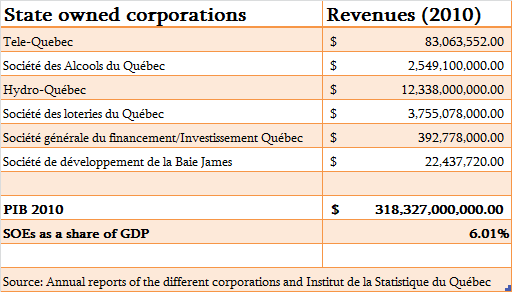
In continuance with a previous post regarding State Owned Entreprises (SOEs) in Quebec, I have assembled a new data that will allow to compare SOEs in Quebec with SOEs in Saskatchewan. Quebec and Saskatchewan are probably the two provinces in Canada that are seen by the general public as being highly “interventionistic” in the economy. Hence comparing them can be interesting as we can see in the table below, Quebec (with SOEs at 6.01% of GDP) intervenes less through SOEs than Saskatchewan does (at 7.23% of GDP).

However, I have failed to find data with regards to revenues of SOEs going back in time enough to evaluate the extent of the privatization trend in Canada, I can however do such a thing with regards to the federal government (a series that will soon be available for selected years 1980, 1990, 2000 and 2010).

Quebec’s SOEs as a share of GDP

One way to estimate the importance of SOEs (State Owned Entreprises) in a given economy is to take their revenues and simply transpose them onto the overall economy as measured by GDP. So I have applied the exercice to my home province of Quebec in Canada (and I intend to begin comparisons soon). This first set is available is my “data sets” section and will be updated regularly to include other nations, provinces or states.

As an interesting aside, everyone interested in the issue of privatization ought to read Netter and Megginson’s 2001 article in the Journal of Economic Literature concerning the results of privatization and the trends with regards to SOEs.  It is void of all jargon that might terrorize non-economic readers and is quite instructive with regards to privatization.

Privatization in Greece

Recently, I was interviewed on Quebec City’s Radio X regarding the economic future of Greece. An important part of the interview focused on privatization and how it could help Greece.  Let us look at some of the assets that Greece is currently privatizing currently :

  1. Hellenic Post (minority stake)
  2. Public Gas Company (minority stake)
  3. Concessions over ports and airports
  4. A casino (minority stake)
  5. Water suppliers
  6. Banks (yes, they own banks which will be partially privatized)
  7. others

In of itself, privatization is no panacea to a public debt problem. Let’s think about it for a second : you are selling an asset to get rid of a liability. You may do such a thing, but your net worth will not be affected in any ways.

Hence when you privatize, you might want to look at something else. According to the OECD (as quoted in this paper), Greece has one of the most regulated economy in Europe and has a higher degree of state-owned corporations as a share of GDP. As the OECD reports again, SOEs (State owned entreprises) in Greece accounted for a higher share of employment than it did for its share of GDP, which might indicate a productivity problem. Hence the idea of privatizing. You are betting that the assets would be made more productive through private ownership and by new incentives provided by competitors (if the crown corporation was a monopoly).

I understand that evaluating the Greek productivity in SOEs challenge is problematic, but this is not the key of this comment but rather that privatization ought to be done in order to liberate the forces of entrepreneurship and instill more discipline in corporation so that they grow more productive, increase in value and reduce prices for consumers.

The proceeds of privatization in this case are only a “happy by-product” of the adopted policy. Considering that corporations like Hellenic Railways are pilling up losses at the pace of 3 million euros a day, privatizing in order to make the economy more open to competitive might just be a policy that could help Greece.

Taxi Regulation in Washington D.C.


A very fascinating about taxi regulation in the District of Columbia in the United States and it is a good illustration of regulatory capture. The objective of a system of supply management by the use of medallions is to restrict access to create a “rent-value” for the permits of the players already in the industry. Considering the immense benefits of restricting competition and creating such a rent value, it is no doubt that someone already in the industry would support the idea.

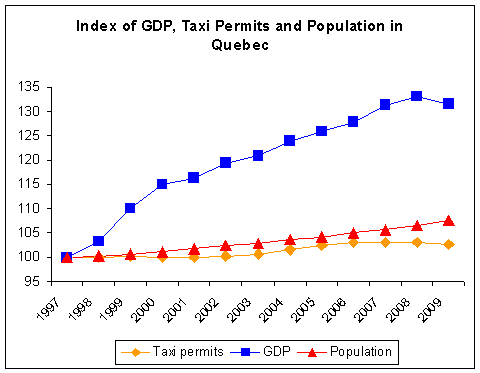
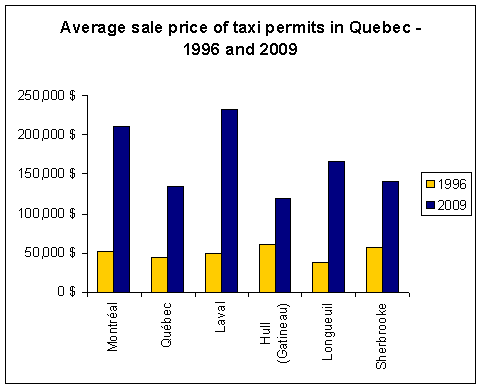
In the past, I have studied the case of taxi regulation in Quebec and concluded that it does create an increase the value of permits by restricting competition and consumers are harmed (by longer waits and higher fares). I have reproduced the graphs of this study for your benefits and have included my data in the “data sets” page.


New Data Set : Great War UK Casualty

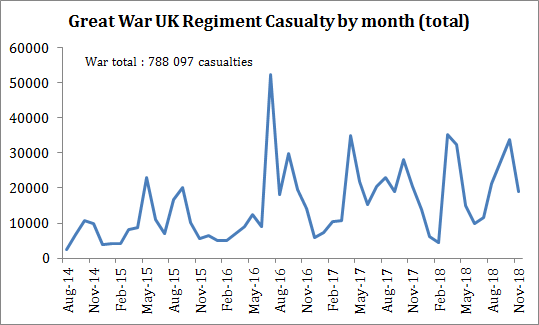
I have a new series of data concerning the casualty of the First World War that were suffered by the United Kingdom on a monthly basis from August 1914 to November 1918. All though unrelated with economics per se, I often see military history be approached without any graphs or data (with the notable exception of the “Wages of Destruction” by Adam Tooze and the Statistical Handbook of World War II). I believe that collecting such data is quite useful for the purposes of the study of military history and I hope that some military historians will find them useful.